The Hadal Zone, the deepest part of the ocean, remains one of the most mysterious habitats on Earth. Spanning depths between 6,000 and 11,000 meters, this area is home to species that have adapted to survive under extreme pressure, near-freezing temperatures, and complete darkness.
One key challenge is that these animals thrive in an environment where humans have limited access, making research difficult. Many species here have evolved unique features, like bioluminescence, to communicate and hunt in the pitch-black waters.
Curious about how life can exist in such a harsh environment? In this guide, we’ll explore the fascinating creatures of the Hadal Zone and uncover the adaptations that make their survival possible.
Stay with us as we dive into the depths and answer the question: what does it take for life to thrive in one of the most extreme habitats on Earth?
Key Takeaways:
A surprising diversity of specially adapted creatures inhabit Earth’s deepest ocean trenches and troughs despite the extreme pressures and scarce nutrients.
These unique animals include giant amphipods with aluminum body armor, ghostlike snailfish, and luminous lures used by predatory cusk-eels.
The discovery of prawns and other large crustaceans thriving at hadal depths hints that many more species remain undiscovered.
Studying resident trench organisms uncovers insights into the limits of natural structural and biochemical adaptations that may aid human deep-sea engineering.
Preserving these unique ecosystems grows increasingly vital as expanding impacts like pollution reach into the hadal zone.
List of Unique Animals in the Hadal Zone
Despite extreme pressures and scarce nutrients, a remarkably diverse array of specially adapted fish, crustaceans, and other creatures somehow manage to eke out an existence in the crushing darkness of the ocean’s deepest zones.
Species
Characteristics and Adaptations
Amphipods (incl. Alicella gigantea)
Gelatinous, scaleless fish with bodies composed of watery cartilage, allowing them to compress and withstand extreme pressure. High levels of TMAO prevent protein unraveling in near-freezing temperatures.
Snailfish
Gelatinous, scaleless fish with bodies composed of watery cartilage, allowing them to compress and withstand extreme pressure. High levels of TMAO prevent protein unravelling in near-freezing temperatures.
Cusk-Eels
Slender predators with enhanced sensory organs, bioluminescent lures, and adaptations for hunting in darkness and pressure.
Grenadiers
Abundant scavengers with an expansive lateral line for detecting water movements and food sources in complete darkness.
Hadal Prawns (Benthesicymus crenatus)
Small crustaceans with thin carapaces and sensory hairs for detecting chemical cues of food in scarce environments.
Giant Amphipods (Hirondellea gigas)
Large, armored scavengers with aluminum hydroxide coating for protection against pressure and predators.
1. The Mysterious World of Amphipods
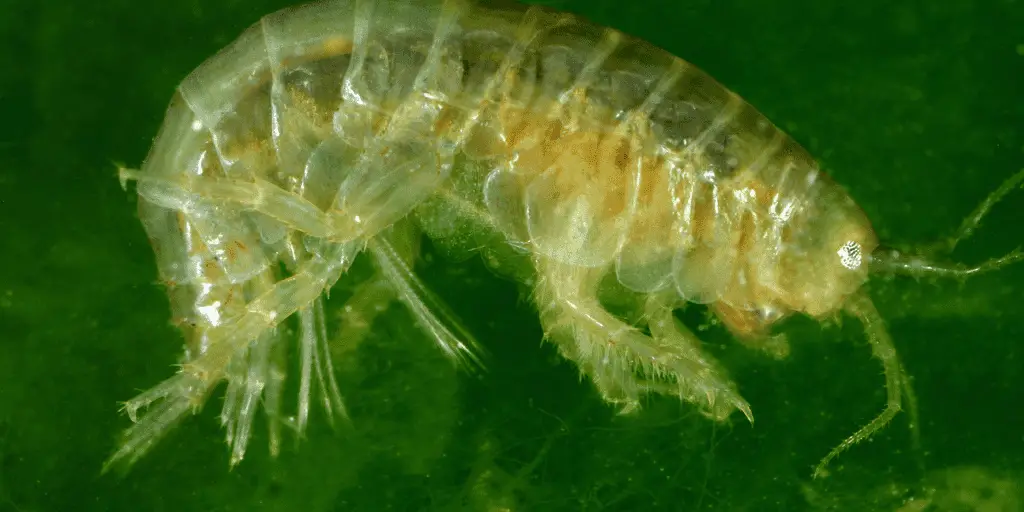
Amphipods are one of the most ubiquitous creatures found in the lightless reaches of the hadal zone, thriving at depths of over 6,000 meters where pressure can exceed 1,000 times that of the surface. Though diminutive in size, ranging from 0.4 inches to around 2.4 inches, amphipods play a vital ecological role in hadal ecosystems.
As scavengers, they recycle nutrients by consuming organic detritus that rains down from the ocean above, making them a foundational part of the food web. Over 170 species of amphipods have adapted to the extreme pressure, cold, and isolation of the hadal environment.
One particularly fascinating resident is the Alicella gigantea, a veritable giant by amphipod standards. Whereas most species measure just a few centimeters, A gigantea can reach lengths of nearly 10 inches.
This exceptional size likely developed in response to the sporadic nature of food availability in the hadal zone. A larger body size enables A. gigantea to store more energy reserves, improving its odds of survival between infrequent feedings.
Alicella Gigantea: A Giant Among Dwarfs
As one of the largest amphipods on the planet, A. gigantea cuts a striking figure in the dark depths of the ocean. Its elongated body is creamy white, providing camouflage against the pockets of sediment where it resides. A. gigantea possesses enlarged sensory organs and appendages, which may allow it to detect scarce food fall from greater distances.
Unique among amphipods, A. gigantea seems capable of swimming and anchoring itself to substrates on the seafloor—adaptations that aid its scavenging lifestyle. While much about the behavior of this elusive giant remains unknown, evidence suggests it may make daily migrations from the seafloor into the water column to feed.
It also appears capable of tolerating wider temperature and chemical ranges than other species. These attributes underscore A. gigantea’s status as one of the most versatile and adaptable denizens of Earth’s least hospitable ecosystem.
2. Snailfish: The Gelatinous Dwellers of the Deep
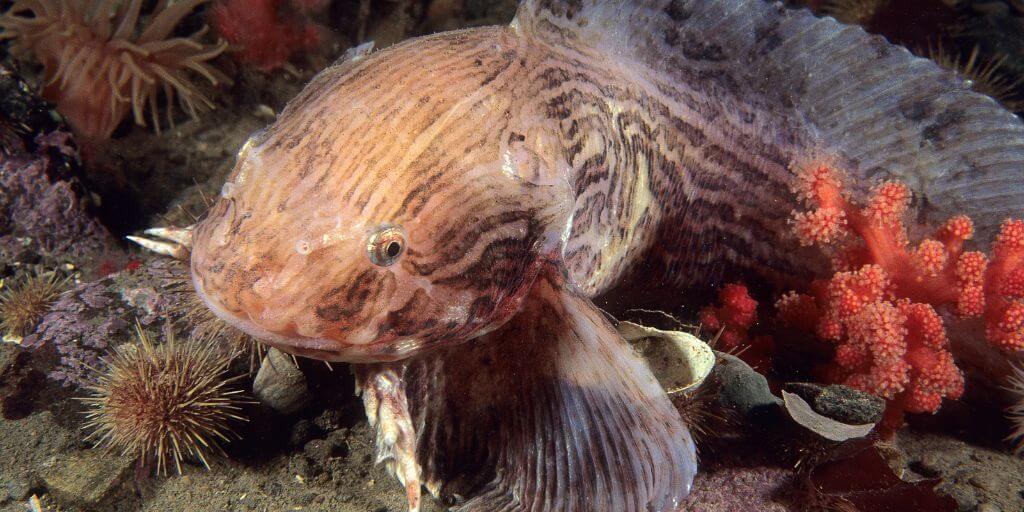
With their soft, translucent bodies and absence of scales, snailfish resemble living lumps of jelly more than your average bony fish. As one of the most ubiquitous groups of fish in the hadal zone, they have been recorded at depths exceeding 26,500 feet below the surface.
Their gelatinous structure is an exquisite adaptation; with bodies primarily composed of watery cartilage rather than bone, snailfish can compress their pliable frames to withstand over 1000 times the atmospheric pressure endured by surface fish.
Unique substances within their tissues also aid survival. High levels of trimethylamine oxide (TMAO) act as a “chemical antifreeze,” preventing snailfish proteins from unraveling under extreme conditions in the trenches. This allows cells to continue functioning normally even in near-freezing temperatures.
The Mariana Snailfish: A Record-Breaking Resident
In 2014, specimens of the Mariana snailfish captured the record for deepest fish ever documented, retrieved from the Mariana Trench at a staggering depth of 26,722 feet. Its translucent, plump appearance resembles a tadpole more than a fish, with its laterally compressed body tapering to a thin, eel-like tail.
Little is known about the behavior of this elusive species. However, the footage reveals Mariana snailfish gliding above the seafloor in brief bursts of movement before settling down, likely an energy conservation technique in an environment where food is scarce.
Ongoing hadal zone research aims to uncover more details about the lifestyle and biology of the extraordinary Mariana snailfish.
3. Cusk-Eels: Masters of the Abyss
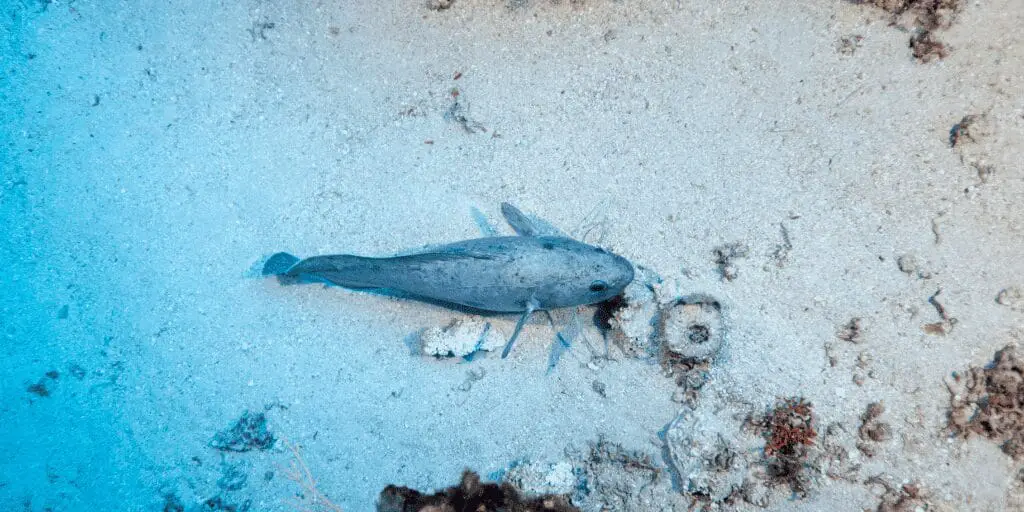
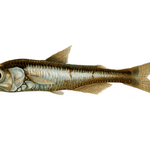
With their slender, muscular frames and prominent fang-like teeth, cusk-eels look like they were purpose-built to thrive in the extreme conditions of the hadal zone.
Though named for their similarity to true eels, cusk-eels belong to the order Ophidiiformes and can be found across a broad bathymetric range—from just below the surface to over 8,000 meters deep. Their adaptations allow them to hunt the sparse prey of the trenches with deadly accuracy.
Many species sport enlarged sensory organs and lateral lines that detect minute pressure changes, along with rows of sensory pores on their heads to pick up the faintest electrical fields from potential prey.
Translucent, scaleless skin also aids their life in darkness. Some additionally wield bioluminescent lures recessed beneath their eyes, which they flash to attract unwary passersby straight into their jaws.
Abyssobrotula Galatheae: The Deepest of Them All
In 1970, researchers were stunned when a specimen of Abyssobrotula galatheae was dredged up from the Puerto Rico Trench at a depth of 8,372 meters, breaking all previous records for a deep-sea fish. While very little is known about this mysterious species, it possesses key adaptations for hadal survival like reduced squamation and highly sensitive lateral line systems.
Discoveries of extreme specialists like A. galatheae continue to amaze scientists and alter our understanding of the limits of marine habitats. Ongoing hadal research aims to uncover what other surprises may lurk in the ocean’s deepest realms.
4. Grenadiers: The Abundant Deep-Sea Scavengers
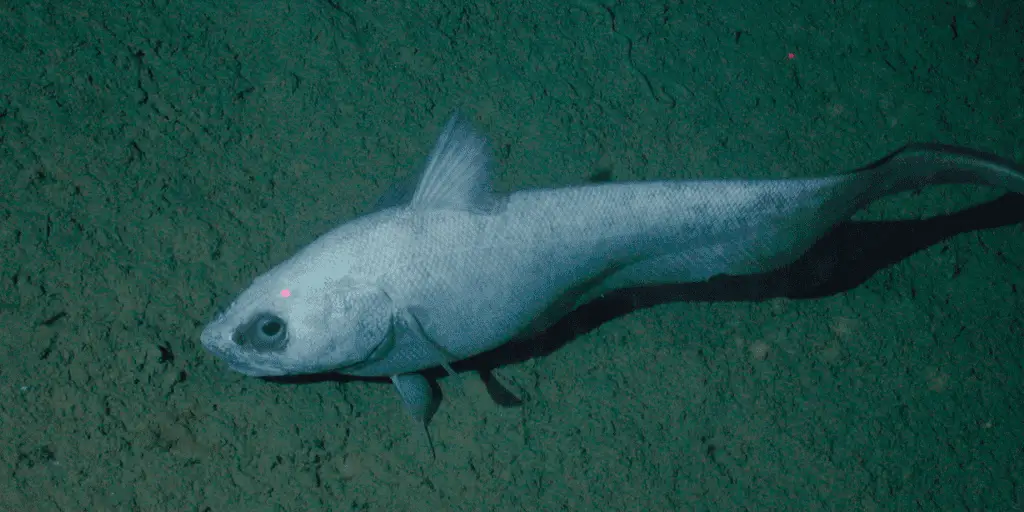
Grenadiers are a highly successful group of marine fish found in great numbers throughout the cold, dark abyss. Over 300 species exist, with many endemic to hadal depths below 6000 meters. Their slender bodies and large heads taper to long, flat tails, giving grenadiers a distinctive tapering appearance.
A hallmark grenadier feature is the expansive lateral line running the length of their body – essentially a sensory organ that detects minute water movements. This allows them to hone in on struggling prey or detect settling organic detritus in the pitch-blackness of the trenches. Grenadiers lack swim bladders as well, which helps counteract the effects of extreme hydrostatic pressure.
As opportunistic scavengers, grenadiers exhibit variable diets, feasting on anything edible they encounter. This adaptable feeding strategy serves them well in the hadal zone where food falls to the seafloor at infrequent, random intervals. By congregating near trenches and cold seeps, they capitalize on geographic areas with regular nutrient inputs.
Adaptations of Hadal Grenadiers
At hadal depths, enhanced sensory systems take priority over vision, which is virtually useless. Many grenadiers exhibit tubular eyes that narrow to barely more than pinholes, reducing optical sensitivity.
Pigmentation fades as well in the absence of light. However, organs like the lateral line become hypertrophied, able to detect the slightest vibrations across a wider area.
Specializations in jaw morphology reflect adaptations for seafloor scavenging. Many species develop fang-like teeth suited for grasping squirming invertebrates or sharp spikes efficient at snagging falling carrion. These adaptations allow grenadiers to capitalize on whatever organic materials drift into their obscure but abundant world.
5. The Enigmatic Hadal Prawns
For years, scientists operated under the assumption that crustaceans were largely absent from hadal depths due to constraints on their calcified exoskeletons. This belief was overturned by the discovery of the hadal prawn Benthesicymus crenatus, dredged up from a trench off Indonesia at a depth of over 7000 meters.
Resembling flattened shrimp, these small invertebrates reach just over an inch in length. Their carapace is thin and delicate with slender eyestalks, while minute sensory hairs coat their bodies and appendages. This allows them to detect the faintest chemical cues signaling food amid the trenches’ scarce resources.
Finding an advanced crustacean thriving at such depths hints that other large invertebrates may yet await discovery in the hadal zone’s unexplored corners. B. crenatus also exhibits adaptations to extreme hydrostatic pressures that warrant further investigation, which could uncover insights useful for deep-sea engineering advances.
Benthesicymus crenatus: A Deep-Sea Survivor
The physiology of B. Crenatus shows unique specializations for dealing with trench conditions. Its tissues seem reinforced to handle pressure through a process called piezolyzation, which increases fluidity in cell membranes. This prevents organ rupture under immense force. Enzymes likewise operate more efficiently at higher pressures compared to relatives in shallower waters.
Little is known regarding the lifestyle of this elusive creature, though it likely scavenges like many hadal denizens. While more discoveries await, B. crenatus represents an unprecedented glimpse into survival adaptations in one of Earth’s most inhospitable habitats.
6. Giant Amphipods: The Armored Giants of the Deep
In the icy darkness of the hadal zone, giant amphipods thrive where most other organisms would perish. Reaching sizes over 10 times their shallow water relatives, these lumbering giants are shielded by unique natural armor against extreme pressure.
Among the trenches and troughs they dwell in, the bodies of large dead creatures drifting down from above are hotly contested sources of food. Built-in body armor provides a survival edge when skirmishing over precious carrion.
One such hardened giant is the aptly named Hirondellea gigas, a large amphipod found as deep as 7000 meters that creates its own aluminum plating. By absorbing aluminum ions from the sediment, H. gigas generates a viscous gelatinous coating composed of aluminum hydroxide which hardens around its body. This protective metallic exoskeleton allows it to feed more daringly than less protected amphipod species.
Hirondellea gigas: The Aluminum Armored Amphipod
Reaching lengths over 4 inches, H. gigas is among the bigger armored giants. A ridge of small spikes runs along its back, likely helping anchor the overflowing gel armor secreted by specialized glands. The armored shell both absorbs damaging pressure effects and shields against predators. It also grants H. gigas the audacity to scavenge in the open for longer periods, allowing it to outcompete smaller amphipods.
These aluminum-plated invertebrates hint that other unique survival strategies await discovery in Earth’s most extreme habitat. Unraveling their secrets may uncover engineering insights useful for human industry in extreme environments. For now, they remain chilling reminders of nature’s ingenuity under the most intense pressures.
Conclusion: Unveiling the Mysteries of the Hadal Zone
The frigid depths of the hadal zone, enveloped in crushing pressure and perpetual darkness, unveil the incredible resilience and adaptability of life on Earth. The animals that inhabit this extreme environment—from jelly-like snailfish to armored giant amphipods—exhibit remarkable evolutionary innovations that allow them to survive and even thrive where most other organisms perish.
The hadal zone continuously challenges our assumptions about the limits of habitability. Discoveries like the Mariana snailfish and aluminum-plated Hirondellea gigas showcase nature’s boundless creativity in developing solutions for existence under intense environmental duress.
As research progresses with advancing submersible technologies, glimpses of surprises yet unknown will further illuminate the enduring diversity nurtured in the ocean’s deepest realms.
By studying these remarkable creatures, humans not only gain appreciation for the tenacity of life on our planet but also uncover bio-inspired breakthroughs to aid our own quests to conquer extreme frontiers. Preserving these unique ecosystems grows increasingly important as well, as even the hadal zone shows vulnerability to anthropogenic impacts like chemical pollution and climate shifts.
As the shroud of mystery enrobing the trenches slowly parts, what future revelations await in Earth’s last great unexplored habitat?
FAQs
How Do Animals Survive the Extreme Conditions of the Hadal Zone?
Animals in the Hadal Zone have developed adaptations such as flexible cell membranes and specialized proteins like TMAO. These features help stabilize their bodies under high pressure. They also have slow metabolisms, allowing them to conserve energy in this nutrient-limited environment.
Are There Any Fish in the Hadal Zone?
Yes, certain fish species like snailfish and cusk-eels inhabit the Hadal Zone. Snailfish have gelatinous bodies and cartilaginous skeletons, which allow them to withstand the immense pressures found at such extreme depths.
What Role Do Amphipods Play in the Hadal Ecosystem?
Amphipods play an essential role in the Hadal ecosystem as scavengers. They feed on detritus sinking from upper ocean layers and, in turn, serve as prey for larger predators, contributing significantly to the food web.
How Do Scientists Study Life in the Hadal Zone?
Scientists explore the Hadal Zone using advanced technology like autonomous underwater vehicles (AUVs) and manned submersibles. These tools withstand extreme pressures, enabling researchers to gather images and samples from this remote part of the ocean.
Hi, I’m Olivia Kepner and I am a zookeeper here in San Diego. Since I was a young girl I have always been fascinated by animals and species across the globe.
I used to beg my parents to take me to our local zoo every single weekend. Well, I say local – it was more like a two hour drive away. But they took me as much as they could, allowing me to fall in love with the animals again and again.